What is digital marketing? In simple words, digital marketing means promoting a product, service, business, or brand through digital channels such as Google, websites, social media, email, and online advertising.
You have probably seen the term everywhere. It appears in job posts, freelancing videos, business pages, and course advertisements. But what does a digital marketer actually do? Is it just posting pictures on Facebook and Instagram?
Not really.
When you search Google and find a business, SEO may have helped it appear. When an Instagram ad shows you a pair of shoes you might like, that is paid social advertising. When a brand posts a useful Reel, that is social media and content marketing. When a store emails you about a sale, that is email marketing.
Digital marketing brings all these activities together.
What Is Digital Marketing in Simple Words?
Digital marketing is marketing that uses digital platforms to reach people.
The basic goal is not very different from traditional marketing. A business still needs to find the right audience, explain what it offers, build trust, and encourage people to take action.
The difference is where that communication happens.
Instead of relying only on newspapers, billboards, brochures, or television, digital marketing uses channels such as search engines, websites, social media platforms, email, mobile apps, and online advertising.
Here is a simple example.
Imagine a new restaurant opens in Peshawar. Someone searches Google for “best burgers near me.” The restaurant appears in the results because its website and Google presence are optimized.
Later, the same person sees the restaurant’s Reel on Instagram. A few days later, they see a Meta ad offering a weekend deal.
SEO, social media content, and paid advertising have now worked together to bring that customer closer to the business.
That is digital marketing in action.
How Does Digital Marketing Work?
First, the business decides who it wants to reach.
A university may want to reach students. A clothing store may want young shoppers. A software company may want business owners.
The business then chooses the right digital channel.
That could be Google Search, Instagram, Facebook, YouTube, email, a website, or another online platform.
The audience sees the message and may interact with it. They could visit the website, watch a video, send a WhatsApp message, complete a form, subscribe to an email list, or buy something.
Digital marketers then measure what happened.
They look at data such as website visits, clicks, leads, conversions, engagement, ad costs, and sales.
This measurement is one of the biggest differences between digital and many traditional forms of marketing. You can often see which campaign, page, keyword, or advertisement produced a result.
Digital Marketing Is More Than Posting on Social Media
This is one of the most common misunderstandings among beginners.
Posting on Facebook or Instagram is part of digital marketing, but it is only one part.
A complete digital strategy may involve Google search visibility, website content, paid advertising, audience research, email campaigns, conversion optimization, analytics, social media, and lead generation.
A digital marketer therefore needs to understand both marketing and technology.
You do not have to master everything at once.
Most people start by understanding the overall field and then develop deeper skills in one or two areas.
7 Main Types of Digital Marketing
1. Search Engine Optimization
Search Engine Optimization, usually called SEO, is the process of improving a website so people can find it through search engines such as Google.
For example, imagine someone searches for “digital marketing course in Peshawar.”
SEO helps relevant websites appear for that search without paying Google for every click.
SEO includes keyword research, website content, technical improvements, internal linking, page optimization, and building authority.
If you want to study this area separately, ExaTech also has a dedicated SEO course in Peshawar covering keyword research, on-page optimization, and ranking strategies.
2. Social Media Marketing
Social media marketing uses platforms such as Facebook, Instagram, LinkedIn, TikTok, and YouTube to communicate with an audience.
This can include posts, Reels, videos, Stories, community management, comments, brand campaigns, and audience engagement.
Good social media marketing is not simply posting every day.
The content should have a purpose. It might educate people, answer questions, build brand awareness, generate enquiries, or support sales.
3. Content Marketing
Content marketing means creating useful content that attracts or educates potential customers.
You are reading content marketing right now.
Blog articles, guides, videos, tutorials, infographics, case studies, podcasts, and social posts can all be forms of content marketing.
Instead of constantly saying “buy from us,” a business answers questions its audience already has.
Useful content can build trust long before someone becomes a customer.
4. Pay-Per-Click Advertising
Pay-per-click advertising, or PPC, allows businesses to pay for visibility online.
Google Ads is one common example.
A business can advertise when someone searches for a relevant keyword. The advertiser usually pays when someone clicks the advertisement.
Paid advertising can produce visibility much faster than SEO, but it requires money and proper campaign management.
Poor targeting can waste a budget quickly.
5. Email Marketing
Email marketing allows a business to communicate directly with people who have joined its email list.
A company might send useful information, product updates, offers, reminders, newsletters, or abandoned-cart messages.
Unlike a social media audience, an email list gives a business a more direct communication channel with its subscribers.
Good email marketing focuses on relevance rather than sending constant promotional messages.
6. Influencer Marketing
Influencer marketing involves working with creators who already have an audience.
A clothing brand might send a product to a fashion creator. A restaurant might invite a local food reviewer. A technology company might collaborate with a creator who talks about software.
The size of an influencer’s following is not the only thing that matters.
Audience relevance and trust are often more important.
7. Affiliate Marketing
Affiliate marketing allows another person or website to promote a product and receive a commission when their referral produces a sale or another agreed result.
You may have seen YouTubers place product links in their descriptions.
If someone buys through that special link, the creator may receive a commission.
Affiliate marketing is common in e-commerce, software, online education, and content publishing.
What Is the Difference Between SEO, Social Media and Paid Ads?
Beginners often mix these channels together, so here is a simple comparison.
| Channel | Simple Explanation |
|---|---|
| SEO | Helps people discover a website through search engines |
| Social Media | Helps brands communicate and engage with an audience |
| Google Ads | Pays for visibility on Google and its advertising network |
| Meta Ads | Pays to reach targeted audiences across Meta platforms |
| Content Marketing | Uses useful content to attract and educate people |
| Email Marketing | Communicates directly with subscribers and customers |
These channels are not competitors.
A business can use several of them together.
For example, SEO can bring visitors from Google while social media keeps the brand visible and paid ads promote a specific offer.
What Does a Digital Marketer Actually Do?
The answer depends on the person’s role.
Someone working in SEO may spend most of the day researching keywords, reviewing websites, optimizing pages, studying competitors, and analyzing search performance.
A social media marketer may plan content, write captions, coordinate designs, manage communities, study engagement, and prepare campaigns.
A performance marketer may spend more time inside Google Ads or Meta Ads. They monitor targeting, budgets, conversions, cost per result, and campaign performance.
A broader digital marketing role may include:
- keyword and audience research
- SEO
- content planning
- social media management
- Google Ads and Meta Ads
- campaign planning
- competitor research
- website marketing
- lead generation
- analytics
- conversion optimization
- reporting
This is why “digital marketer” can describe several different types of work.
What Is a Target Audience?
A target audience is the group of people a business wants to reach.
Imagine you are marketing a beginner coding course.
Advertising it randomly to everyone in Pakistan would probably waste money. A more relevant audience might include university students, fresh graduates, people interested in technology, and job seekers within a certain age range.
Understanding the target audience helps marketers decide what message to use and where to advertise it.
The better you understand the audience, the easier it becomes to create useful marketing.
What Is a Marketing Funnel?
A marketing funnel describes the stages someone may go through before becoming a customer.
At first, they may not know the business exists.
Then they discover it through Google, social media, an advertisement, or a recommendation.
They learn more, compare options, build trust, and eventually decide whether to take action.
That action could be purchasing a product, registering for a course, booking an appointment, calling a company, or submitting a form.
Digital marketers create content and campaigns for different stages of this journey.
Why Are Analytics Important in Digital Marketing?
Digital marketing should not depend entirely on guessing.
Analytics help marketers understand what people actually do.
For example, a campaign may receive thousands of views but very few website visits. Another campaign may reach fewer people but produce more enquiries.
Which one performed better?
That depends on the campaign’s goal.
Marketers study data to answer questions like these and improve future campaigns.
Common measurements include clicks, impressions, engagement, website traffic, leads, conversions, cost per click, and conversion rate.
A beginner does not need to memorize every marketing metric immediately.
Start by understanding what the business wants to achieve. Then measure the numbers connected to that goal.
Is Digital Marketing a Good Skill for Students and Beginners?
Digital marketing can be learned without a marketing degree.
The basics are accessible to complete beginners because you can start with familiar platforms such as Google, Instagram, Facebook, websites, and YouTube.
Learning the field properly still takes practice.
Watching a few videos about Instagram or learning how to boost a Facebook post does not make someone a complete digital marketer.
You need to understand the audience, content, campaigns, data, customer journey, and business goals behind those tools.
Beginners may eventually specialize in areas such as SEO, social media marketing, paid advertising, content marketing, analytics, or email marketing.
Others use several digital marketing skills together when working with an agency, business, or freelance client.
What Does Digital Marketing Look Like in Pakistan?
Digital marketing in Pakistan is not something that only large companies use.
Think about businesses you already see every day.
A Peshawar restaurant appears when someone searches Google for nearby food.
A clothing store posts new arrivals on Instagram and promotes selected posts through Meta Ads.
An education institute runs lead-generation campaigns for upcoming admissions.
An e-commerce website publishes useful content to rank for product-related searches.
A freelancer in Pakistan manages social media or paid advertising for a client in another country.
These are all examples of digital marketing.
Digital skills are also included in formal training initiatives in Pakistan. The Government of Pakistan’s National Vocational and Technical Training Commission lists SEO, content marketing, social media management, Google and Meta Ads, analytics, and reporting within its official Digital Marketing course.
That gives beginners a useful picture of how broad the field actually is.
What Skills Do You Need to Learn Digital Marketing?
Digital marketing combines several types of skills.
Marketing Fundamentals
You should understand concepts such as target audience, customer needs, brand awareness, customer journey, marketing funnels, leads, and conversions.
These concepts matter no matter which digital marketing channel you eventually choose.
Technical Skills
Technical skills may include SEO, keyword research, analytics, website basics, conversion tracking, Google Ads, and Meta Ads.
You do not need to become a programmer to learn digital marketing.
However, being comfortable with technology helps.
Creative Skills
Digital marketing also requires creativity.
You may need to write content, plan videos, develop campaign ideas, understand basic design, or find better ways to explain a product.
You do not have to become a professional graphic designer, but understanding what makes content clear and useful is valuable.
Professional Skills
Communication matters.
Digital marketers often work with clients, designers, developers, sales teams, content writers, and business owners.
Reporting, problem-solving, time management, research, and explaining ideas clearly are all useful professional skills.
How Can a Beginner Start Learning Digital Marketing?
Trying to learn every platform at the same time can quickly become confusing.
A better approach is to build your knowledge in stages.
Step 1: Understand marketing fundamentals. Learn what an audience, customer journey, lead, conversion, and marketing funnel mean.
Step 2: Learn the major digital channels. Understand what SEO, social media, content marketing, email, and paid advertising actually do.
Step 3: Choose one area to explore more deeply. SEO or social media marketing are common starting points, but there is no single correct choice.
Step 4: Practice on something real. Create a small website, social media page, personal project, or mock business and apply what you are learning.
Step 5: Learn the relevant tools. The tools you need will depend on your specialization.
Step 6: Build a small portfolio. Save examples of campaigns, keyword research, content plans, advertisements, reports, or projects you complete.
Step 7: Expand gradually. Once one area makes sense, start learning how it connects with the other channels.
Practical work is important because digital marketing makes much more sense when you see what happens after a real campaign goes live.
Should You Learn Every Type of Digital Marketing?
Not in the beginning.
Understanding every major channel is useful. Trying to become an expert in all of them at once is usually not.
You might discover that you enjoy writing and SEO more than advertising.
Someone else may enjoy numbers, campaign optimization, and analytics.
Another person may be strongest at content strategy and social media.
Start broad enough to understand digital marketing as a whole. Then go deeper into the area that fits your interests and strengths.
Digital Marketing for Businesses vs Digital Marketing as a Career Skill
The same core concepts apply, but the goals can be different.
A business owner may learn digital marketing so they can promote their own company, understand agencies, or make better marketing decisions.
A student may learn it to develop a professional skill.
A freelancer may specialize in one service and work with clients.
A marketing employee may manage several channels inside one company.
If your main interest is using these techniques for a company rather than learning the field as a career skill, ExaTech’s guide to digital marketing for small businesses looks specifically at how local businesses can use search, social media, websites, WhatsApp, reviews, and advertising.
Can You Learn Digital Marketing Without a Marketing Degree?
Yes.
A formal marketing degree can provide useful business knowledge, but it is not a requirement for understanding or practicing digital marketing.
What matters is whether you understand the concepts and can apply them.
That means actually researching an audience, creating content, planning campaigns, working with tools, reading data, and learning from results.
Your skills improve when you practice.
Learning Digital Marketing in Peshawar
If you are in Peshawar, you can start with free learning resources and personal practice before deciding whether you need structured training.
A structured course becomes useful when you want a planned learning path, trainer guidance, practical exercises, and a place to ask questions when something does not make sense.
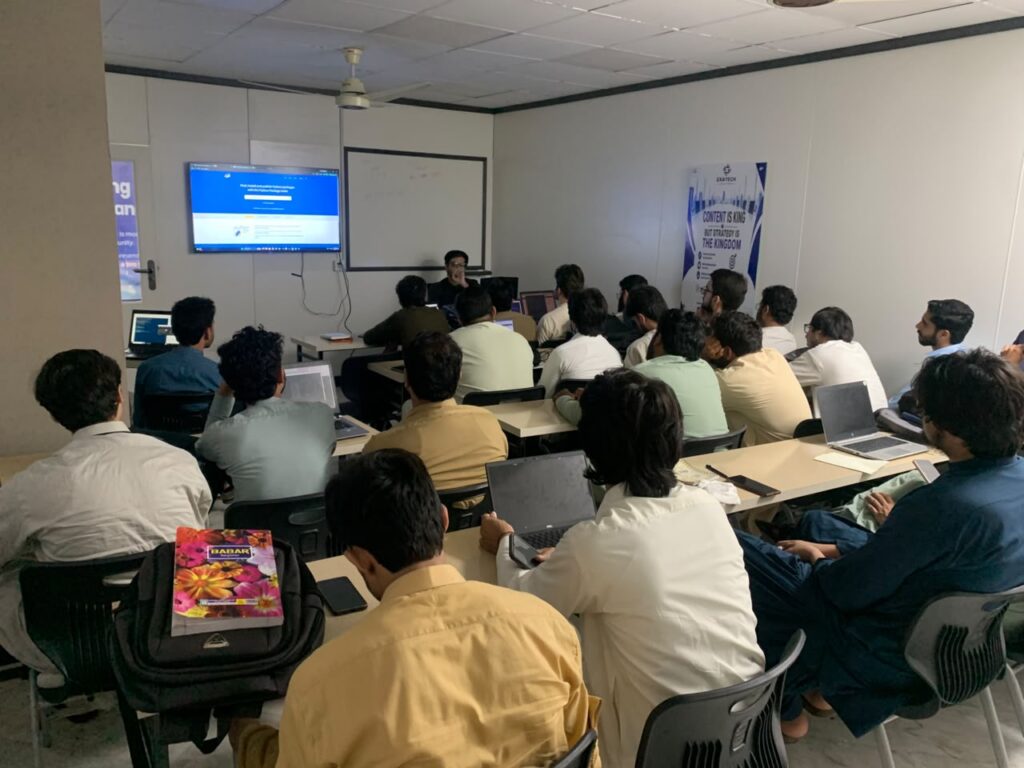
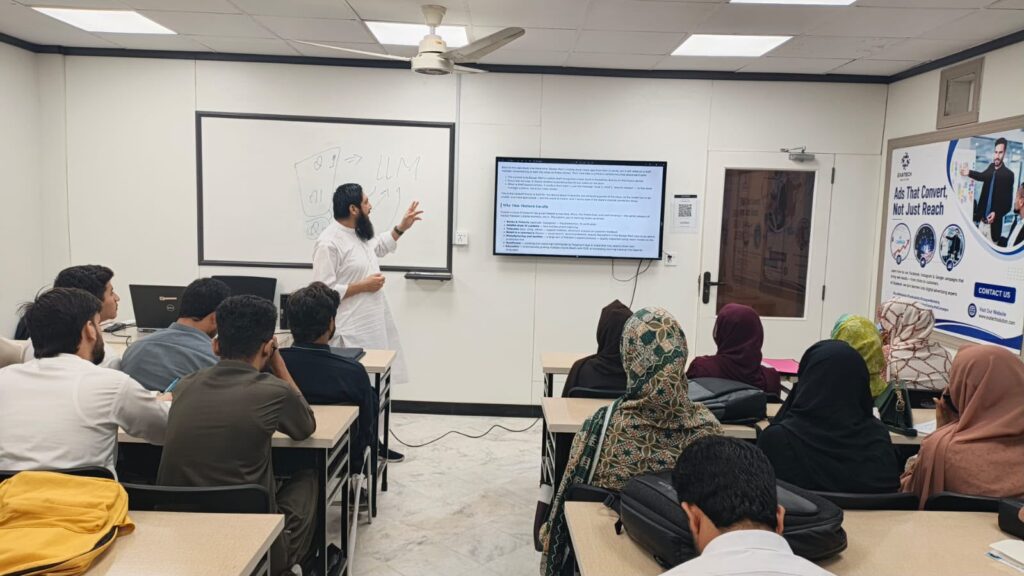
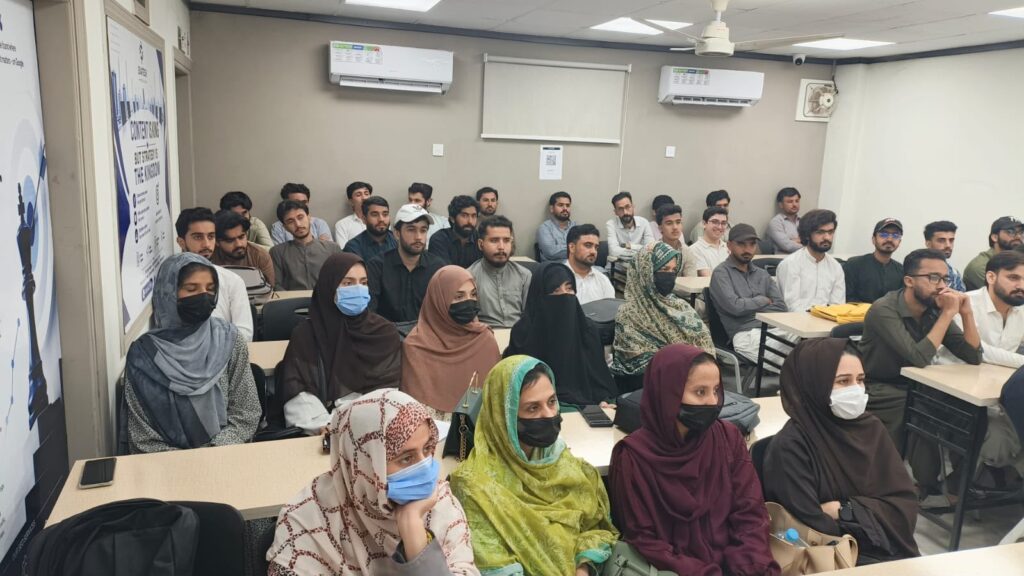
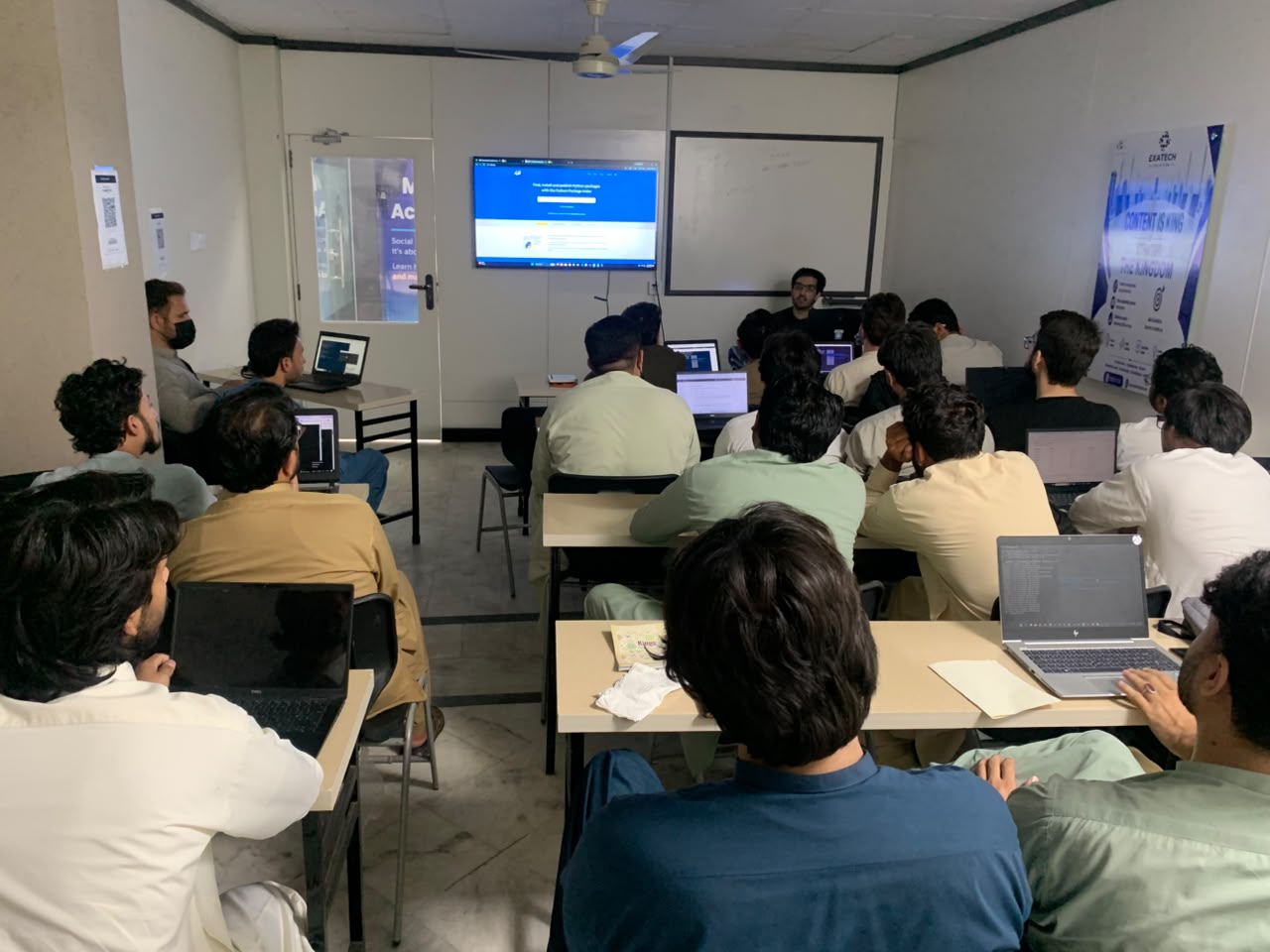
ExaTech’s Digital Marketing course in Peshawar is designed for beginners and currently covers areas including social media, paid advertising, content strategy, campaign planning, and practical campaign work. ExaTech states that learners do not need a previous marketing background to start.
The important part is not simply completing a course.
You should practice what you learn and build examples of your work.
FAQs
What is digital marketing?
Digital marketing means promoting products, services, businesses, or brands through digital channels such as search engines, websites, social media, email, and online advertising.
What is digital marketing for beginners?
For beginners, digital marketing means learning how businesses use online platforms to attract an audience, communicate with potential customers, generate leads or sales, and measure the results.
What are the main types of digital marketing?
The main types include SEO, social media marketing, content marketing, PPC advertising, email marketing, influencer marketing, and affiliate marketing. Analytics, conversion optimization, mobile marketing, and website marketing also play important roles.
Is digital marketing easy for beginners?
The basic concepts are beginner-friendly, but becoming skilled takes practice. You need time to understand real campaigns, tools, audiences, content, advertising, and performance data.
Can I learn digital marketing without a marketing degree?
Yes. You can learn digital marketing without a formal marketing degree. Practical knowledge, consistent practice, real projects, and the ability to understand campaign results are important.
Is digital marketing only social media marketing?
No. Social media is only one part of digital marketing. The wider field includes SEO, websites, content marketing, email, paid advertising, analytics, lead generation, and conversion optimization.
Is digital marketing useful for students in Pakistan?
It can be a useful skill for students who are interested in marketing, freelancing, online businesses, agencies, e-commerce, content, advertising, or related careers. Students should focus on developing practical ability rather than expecting a course alone to guarantee employment or income.
Start With the Basics, Then Practice
Digital marketing becomes much easier to understand when you stop looking at it as one huge skill.
It is a group of connected channels.
SEO helps people find you. Content gives them something useful. Social media helps you communicate. Paid ads increase targeted visibility. Email keeps you connected. Analytics tells you what happened.
You do not need to learn everything in your first week.
Understand the fundamentals, choose an area, practice it, and gradually learn how the different parts work together.
If you are in Peshawar and want to move from basic concepts into practical campaign work, you can contact ExaTech Peshawar for information about its Digital Marketing training, current batches, class schedules, and enrollment options. Call +92 3200004893, email info@exatechsolution.com, or visit First Floor, Atlas Medical Center, University Road, adjacent to NADRA Mega Centre, Peshawar.