In-demand skills in Pakistan 2026 is not a single list every employer agrees on. It shifts by industry, by role, and by how much practical proof you can show alongside the skill itself. What has become clear from recent market data is that digital and technical skills are pulling real weight in the economy, and employers are increasingly looking past degrees toward what a candidate can actually do.
Pakistan’s freelance export earnings reached 352 million dollars in July and August of fiscal year 2027, up 44 percent from the same period a year earlier, according to State Bank of Pakistan data. IT-related freelance services alone accounted for 212 million dollars of that figure. Industry representatives have specifically pointed to artificial intelligence tools as one of the fastest-growing skill areas freelancers are picking up to stay competitive internationally. That is a strong signal about where practical demand sits right now, even if it is not the only signal worth paying attention to.
This guide breaks down which skills are actually showing up in employer and client demand, what beginners can realistically build with each one, and how to become job-ready once you have picked a direction.
It is worth being upfront about what this guide is not. It is not a promise that learning any single skill guarantees a job or a specific income. The freelance export figures above show genuine growth in demand for digital work, but growth in demand is not the same as a guarantee for any individual learner. What actually determines whether a skill pays off is how deeply you learn it and how much real, demonstrable work you build around it.
What Skills Are Employers Actually Looking For in Pakistan in 2026?
Employers in Pakistan are generally looking for two things at once: a technical or digital skill that solves a real problem, and the professional habits that make someone easy to work with. Technical ability alone is not enough if a candidate cannot communicate clearly, understand a brief, or manage a deadline. The reverse is also true. Strong communication without any demonstrable technical skill does not go far in a market that increasingly evaluates candidates on portfolios and practical work.
The most useful way to think about this is not “which skill is trending” but “which skill can I prove I have.” A candidate who can show a working website, a documented SEO audit, or a small AI-assisted automation project has something concrete to point to. A candidate with only a list of skills on a CV does not.
8 Skills Employers in Pakistan Are Looking For in 2026
These are the skill areas showing up most consistently across job postings, freelance demand, and industry commentary.
Artificial intelligence and AI tools. Covers practical AI tool use, prompt engineering, automation of repetitive tasks, and AI-assisted workflows. Businesses use this for content creation, reporting, and speeding up routine work. A beginner can build a small automation project or document an AI-assisted workflow as proof of ability.
Cybersecurity. Covers networking fundamentals, security monitoring, vulnerability assessment, and ethical hacking basics. IT teams and security-focused companies use this to protect systems and data. A beginner can document a security lab exercise or a basic vulnerability assessment on a test environment.
Website development. Covers HTML, CSS, JavaScript, responsive design, and the basics of backend work and deployment. Businesses of every size need functioning websites, which makes this one of the more consistently demanded technical skills. A beginner can build a working website as direct proof of ability.
Digital marketing. Covers social media strategy, content planning, basic paid advertising, and campaign analytics. Agencies and businesses use this to run and measure marketing efforts. A beginner can build a mock campaign with sample content and a basic strategy document.
SEO. Covers keyword research, on-page optimization, technical SEO, and content optimization using tools such as Google Search Console. Websites and e-commerce businesses use this to improve visibility in search results. A beginner can complete and document a full SEO audit of a real website.
Data and analytics. Covers interpreting data, working with spreadsheets, basic SQL, and building simple dashboards or reports. Businesses use this across operations, marketing, and finance to make decisions based on real numbers rather than guesswork. A beginner can build a small dashboard or written report from a public dataset.
Graphic design and video editing. Covers branding, social media design, and video editing for reels, YouTube, and promotional content. Brands, agencies, and content-driven businesses use this constantly. A beginner can build a design or video portfolio from a handful of strong sample pieces.
Communication and problem-solving. Not a technical skill on its own, but consistently mentioned by employers alongside technical ones. This covers understanding a brief correctly, explaining your work clearly, and working through problems without needing constant supervision. It shows up in how you write proposals, respond to feedback, and handle a project from start to finish.
Learning several of these at once rarely works well. Picking one, learning it properly, and building real proof of ability gets better results than a shallow pass through all eight.
Is AI the Most Important Skill to Learn in 2026?
AI is genuinely relevant, but treating “AI” as a single skill is misleading. It actually spans several different levels of ability.
At the simplest level, there is using AI tools directly for everyday tasks such as writing, research, or basic content generation. One level up is prompt engineering, which means getting consistent, high-quality output from AI tools through better instructions. Beyond that is automation, where AI tools are connected into workflows that handle repetitive tasks without manual input each time. Further along is working with data to support AI-driven decisions, which starts to require more technical grounding. At the more advanced end sits machine learning, and beyond that, AI development itself, which involves building and training models rather than just using existing tools.
Most beginners in Pakistan’s job market are realistically entering at the tool-use, prompt engineering, or automation level, and that is a perfectly reasonable place to start. Claiming “AI skills” without being able to show a specific, practical example of applying them tends to fall flat with employers who have seen the term used loosely.
Which IT Skills Are Best for Fresh Graduates?
Fresh graduates benefit most from skills that let them produce demonstrable work quickly, since a strong portfolio matters more early on than years of experience they do not yet have.
SEO, digital marketing, and graphic design and video editing tend to have the shortest path from learning to a finished, showable project. Website development takes a bit longer to reach a professional standard but produces one of the clearest forms of proof, a working site. AI tool use and automation can also produce fast, demonstrable results, particularly when applied to a real business problem rather than a generic exercise. Cybersecurity and deeper data or AI development work generally take longer to reach a job-ready standard, since they require more foundational technical knowledge before the output becomes genuinely useful to an employer.
Which Skills Can You Learn Without a Computer Science Degree?
Several of the skills covered here do not require a computer science degree to start learning or to become genuinely competent.
SEO, digital marketing, and graphic design and video editing are almost entirely skill and portfolio driven, meaning what you can show matters far more than any formal qualification. Many practical AI applications also fall into this category, particularly tool use, prompt engineering, and basic automation. Website development sits somewhere in between. It does not require a degree, but it does require structured technical learning to reach a professional standard. Cybersecurity and deeper AI development are the two areas here that require progressively more technical foundation, including networking or programming knowledge, regardless of whether that knowledge comes from a degree or from structured self-study.
What Do Employers Mean by “Practical Skills”?
When employers say they want practical skills, they generally mean something they can evaluate directly rather than take on faith. That includes finished projects, a portfolio of real work, code repositories for development work, campaign reports for marketing work, live websites, design samples, documented technical labs for cybersecurity, and completed internships.
Certifications and courses still matter, but mostly as a signal that you studied a subject in a structured way. They rarely substitute for actual evidence of applied ability. A candidate who can show three solid projects alongside a certificate is in a stronger position than one with only the certificate.
How to Choose the Right Skill for Your Career
Rather than defaulting to whichever skill sounds the most popular right now, weigh four things together. Your genuine interest in the subject, since sustaining months of learning is far easier when you are not forcing yourself through it. Your existing background, since a skill that connects to something you already know tends to move faster than starting from nothing. The kind of job role you actually want, whether that is a technical, creative, analytical, or client-facing direction. And your realistic learning commitment, meaning how much time you can genuinely give it each week without burning out.
A skill that fits all four of these reasonably well will usually serve you better than the single most talked-about skill of the year.
It also helps to remember that this choice is not permanent. Plenty of professionals end up building a second or third skill later once the first one is established, often because working in one field naturally exposes them to another. Someone doing SEO work regularly ends up learning enough about content and analytics to move into broader digital marketing. Someone doing website development for small businesses often picks up enough design sense to offer basic branding work alongside it. Treat your first skill as a genuine starting point rather than a decision you have to get perfectly right on the first attempt.
How to Become Job-Ready After Learning a New Skill
Learning a skill and being job-ready for it are two different stages, and the gap between them is where most of the real work happens.
Start by learning the fundamentals properly rather than rushing through them. Practice using the actual tools involved, not just the theory behind them. Build two to four solid projects once the basics are in place, since this is what turns knowledge into proof. Put that work together into a simple, clear portfolio. Update your CV and LinkedIn profile to reflect the skill and the portfolio, not just a list of course names. Apply for internships or junior roles once you have something real to show. Then continue specializing within that skill rather than immediately jumping to a new one, since depth tends to matter more than breadth once you are employed or freelancing.
Where to Learn These Skills in Peshawar
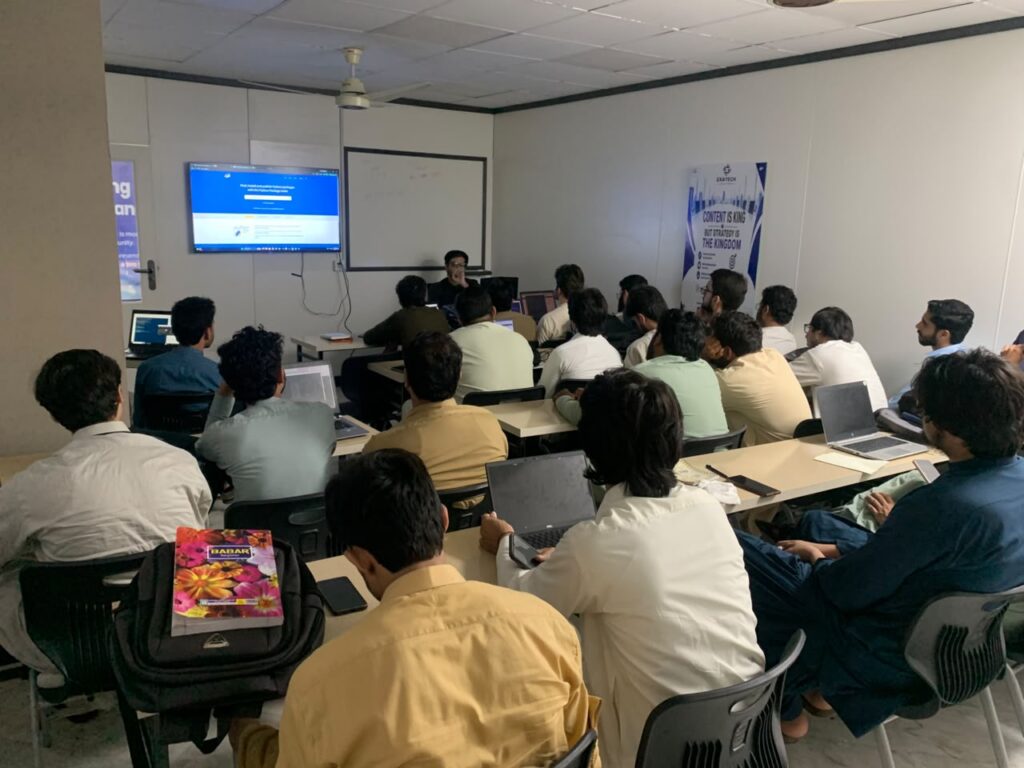
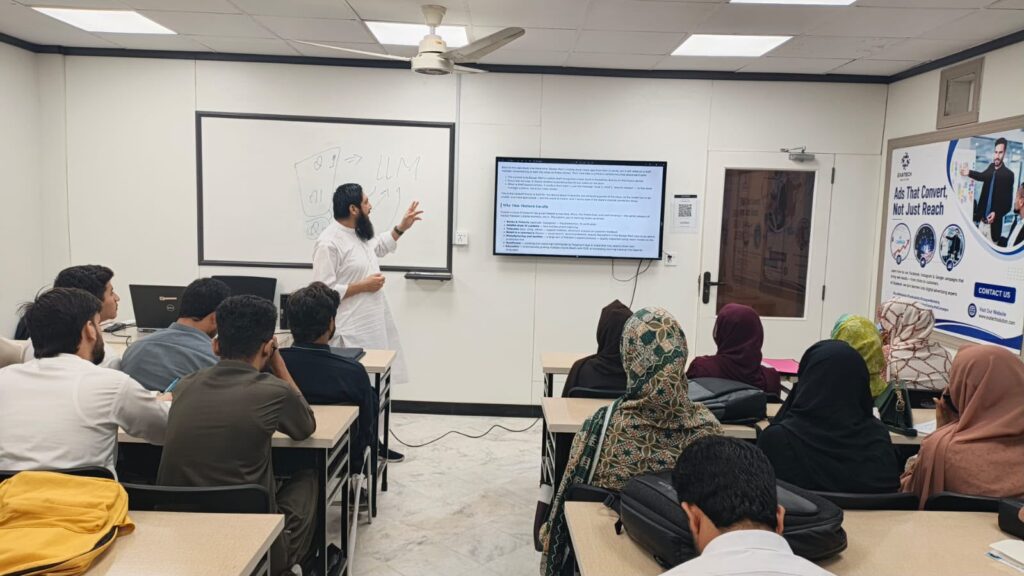
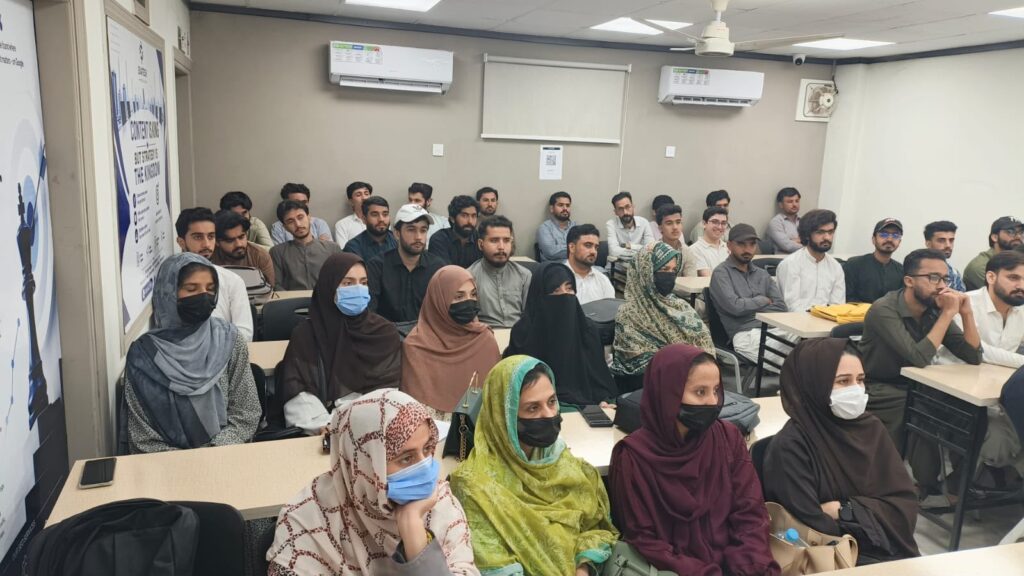
ExaTech Solution offers practical, project-based training in six of the areas covered here: artificial intelligence, cybersecurity and ethical hacking, website development, SEO, digital marketing, and graphic design and video editing. Training is built around finished projects and portfolio work rather than lecture-only theory, which matters given how much weight employers now place on demonstrable ability.
Completing a course does not by itself guarantee a job. What it can realistically give you is the fundamentals, guided practice, and a set of projects you can build a portfolio around, the same combination employers are actually asking for. Freelancers registered with the Pakistan Software Export Board can also access additional support as they start applying these skills to real client work.
Frequently Asked Questions
What is in-demand skills in Pakistan 2026?
Artificial intelligence and AI tools, cybersecurity, website development, digital marketing, SEO, data and analytics, and graphic design and video editing are showing the most consistent demand, alongside communication and problem-solving skills that employers expect regardless of technical specialty.
Which skills are employers looking for in Pakistan?
Employers are generally looking for a specific technical or digital skill backed by demonstrable work, combined with the ability to communicate clearly and manage a task through to completion.
What is the most in-demand IT skill in Pakistan?
There is no single skill that outranks all others for every role. AI tool use and automation are growing quickly, but website development, cybersecurity, SEO, and digital marketing all show consistent, real demand depending on the type of role you want.
Is AI a good skill to learn in Pakistan?
Yes, particularly practical AI tool use, prompt engineering, and automation, which are accessible to beginners and increasingly requested by employers and freelance clients. Deeper AI development requires more technical grounding and takes longer to reach a job-ready level.
Which skills can I learn without a computer science degree?
SEO, digital marketing, graphic design, video editing, and many practical AI applications can be learned to a competitive level without a computer science degree. Website development, cybersecurity, and advanced AI work require more structured technical learning, though not necessarily a formal degree.
How can I become job-ready in Pakistan?
Learn the fundamentals of one skill properly, build two to four real projects, put together a simple portfolio, update your CV and LinkedIn to reflect that work, and apply for internships or junior roles once you have something concrete to show.
If you want structured help turning one of these skills into something job-ready, ExaTech Solution’s contact page is the fastest way to ask about current course options in Peshawar.