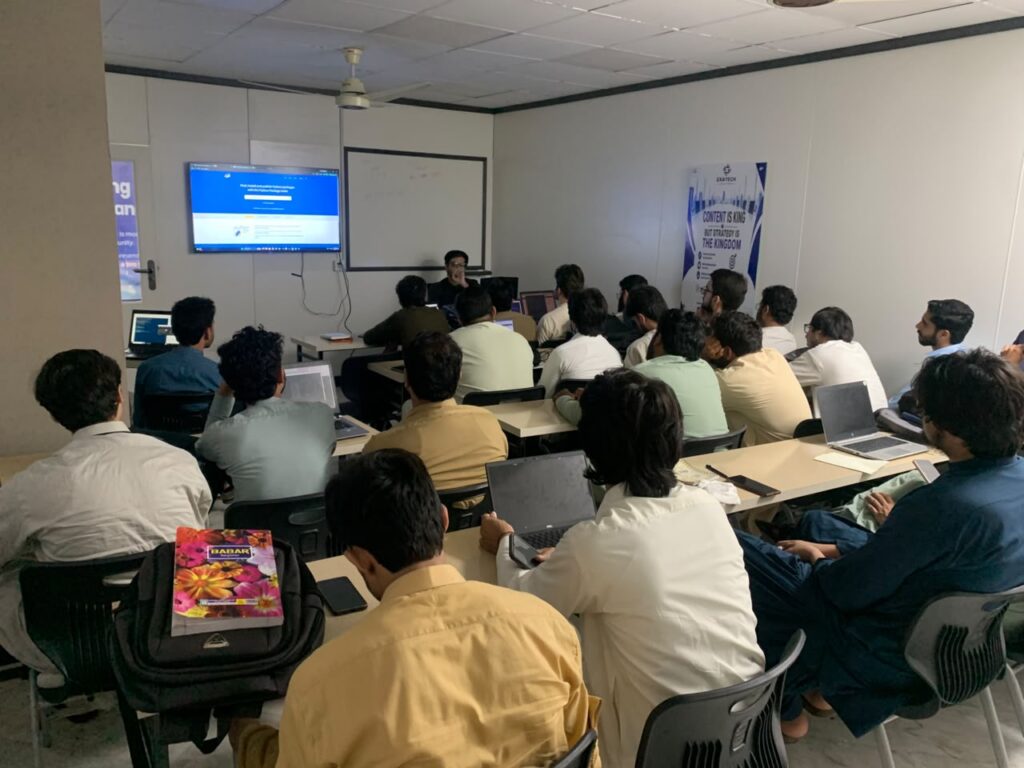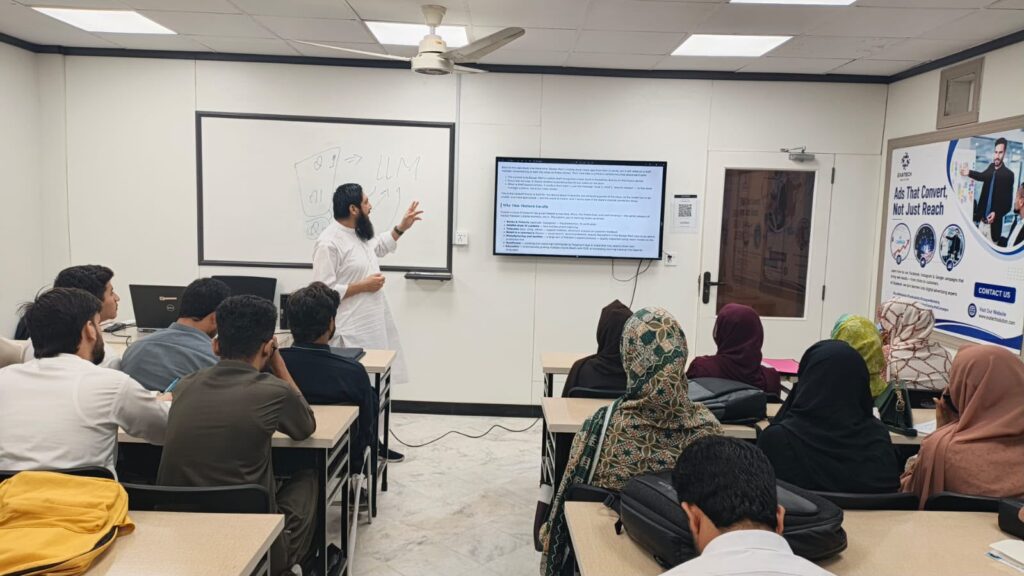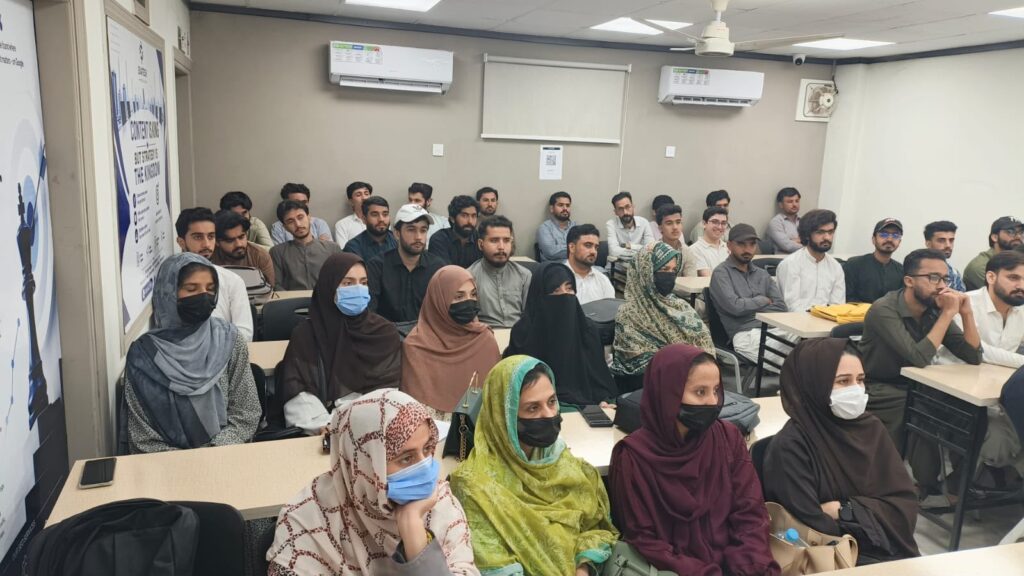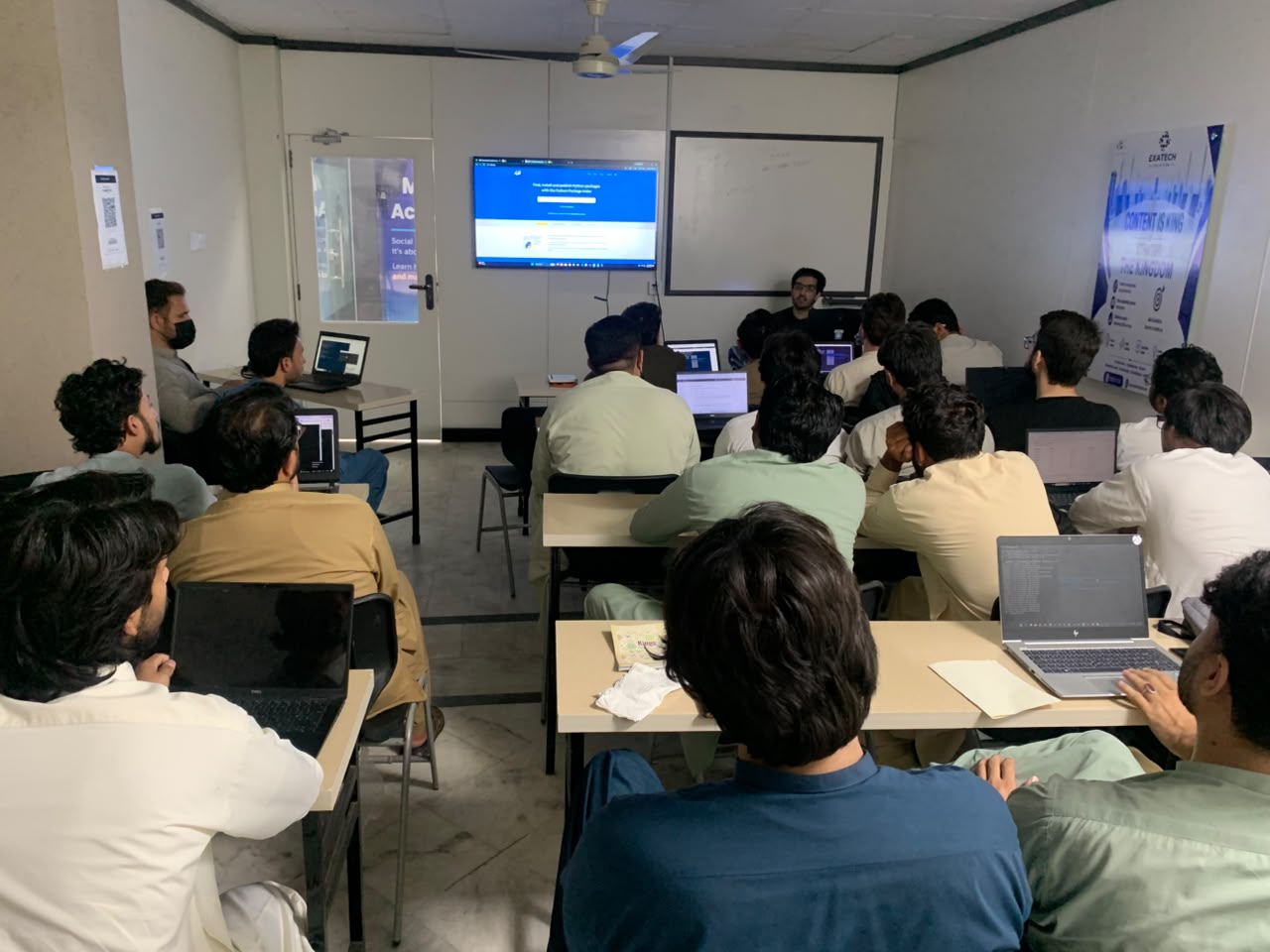
Weekend IT courses in Peshawar give working professionals a real way to build a technical skill without stepping away from a stable job first. If your weekdays are already taken up by office hours, commuting, and family time, a fixed weekend or flexible batch gives you a routine you can actually stick to. The real work is picking a course that fits where you want your career to go, then protecting the practice time outside class that turns lessons into a usable skill.
This guide walks through what weekend and flexible IT training actually looks like for someone balancing a full-time job, which skills tend to fit that schedule best, and how to choose one without wasting months on the wrong course.
The question most working professionals in Peshawar actually ask is not whether they should learn a new skill. It is when. Between office hours, commuting across the city, and the usual demands of family life, weekday evening classes often feel out of reach. A weekend or flexible batch removes that obstacle by giving you one predictable block of time each week that does not compete with your job.
Why Weekend IT Courses Work for Working Professionals
You do not need to quit your job to learn a new skill. That is the biggest appeal of weekend and flexible-batch training. You keep your salary, keep your experience growing in your current role, and add a new capability on the side instead of gambling on a career break.
A fixed weekly session also builds a rhythm. Instead of trying to squeeze in random hours whenever you feel motivated, you show up on a set day, learn one block of material, and spend the week between sessions practicing it. That gap between classes matters more than people expect. It gives your brain time to absorb what you just learned before the next layer gets added on top.
For most working professionals, this is not about starting an IT career from zero. It is about upgrading a career that already exists. A marketer picking up SEO, an office employee learning AI tools to speed up daily tasks, or a small business owner learning digital marketing to run their own campaigns are all adding to something they already have, not replacing it.
There is also a compounding effect that people underestimate. Someone who already has two or three years of work experience and adds a practical IT skill on top of it usually has an easier time applying that skill than a complete beginner would. You already know how a workplace runs, how to communicate with a manager or client, and how to manage deadlines. The course fills in the technical gap. That combination, existing work experience plus a new practical skill, tends to move faster than starting a career from nothing.
Which IT Skills Can Working Professionals Learn on Weekends?
Not every IT skill suits a part-time schedule equally well. The ones that work best are practical, project-based, and let you apply what you learn directly to real tasks between sessions.
Artificial Intelligence
AI training is one of the most useful additions for someone already working. You are not learning to become a research scientist. You are learning prompt engineering, automation, and how tools like ChatGPT fit into daily business tasks such as reporting, content drafting, and data analysis. Professionals in marketing, operations, and customer service can usually start applying this within days of the first class.
Cybersecurity and Ethical Hacking
For people who want a more technical, security-focused direction, cybersecurity and ethical hacking training covers network security, vulnerability assessment, and penetration testing fundamentals. This path suits professionals already working in IT support or networking who want to move into a security-focused role over time.
SEO
SEO training is a strong fit for anyone in marketing, content, or e-commerce. You learn keyword research, on-page optimization, and technical SEO basics using tools such as Google Search Console and Google Analytics. Because SEO work is mostly applied directly to a live website, weekend learners can test what they studied on their own site or their employer’s site within the same week.
Digital Marketing
Digital marketing training covers social media strategy, content planning, ad campaigns, and analytics. It is especially relevant for professionals in sales, business development, or anyone running a side business who wants to manage their own marketing instead of outsourcing it.
Website Development
Website development training suits professionals who want to move toward a more technical role or simply want the ability to build and maintain websites themselves. It covers coding fundamentals, site structure, and deployment, and gives you a portfolio of built projects by the end.
Graphic Design and Video Editing
Graphic design and video editing training fits creative professionals, content creators, and freelancers. You work with tools such as Adobe Photoshop and Adobe Premiere Pro to learn design principles, branding, color theory, and motion graphics, building a visual portfolio as you go.
How to Choose the Right Weekend IT Course
Pick based on where you want your career to go, not based on which course sounds the most popular that month. This quick reference can help narrow it down.
| If you want to… | Consider learning… |
|---|---|
| Automate parts of your current job | Artificial Intelligence |
| Move into a security-focused IT role | Cybersecurity and Ethical Hacking |
| Grow a business or personal brand online | Digital Marketing |
| Improve how a website ranks and performs | SEO |
| Build and maintain websites yourself | Website Development |
| Create visual content or freelance creatively | Graphic Design and Video Editing |
If two options still feel equally appealing, pick the one that connects most directly to your current job. Skills that reinforce what you already do tend to produce results faster than skills that require starting an entirely new direction.
How to Balance a Full-Time Job With Weekend Classes
Balancing a job and a course is less about finding extra time and more about protecting the time you already have. A few habits make the difference between finishing strong and losing momentum by week three.
Set aside fixed practice hours during the week, even if it is only thirty minutes after work a few days a week. Consistency beats long, occasional study sessions.
Avoid taking more than one course at a time. Splitting focus across two subjects usually means neither one gets learned properly.
Practice using tasks from your actual job wherever possible. If you are learning SEO, apply it to your employer’s website. If you are learning AI tools, use them on real reports you already produce. Real tasks stick better than generic exercises.
Build small projects instead of only watching lessons. A finished project, even a simple one, teaches you more than passively following along, and it becomes something you can show later.
Keep your weekly schedule realistic. If you know a particular week will be busy at work, plan lighter practice that week instead of skipping it entirely.
Tell your manager or team, where appropriate, that you are studying something new. It sounds minor, but colleagues and managers who know you are building a skill on the side are often more willing to work around your schedule during exam weeks or project deadlines within the course. It also puts your new skill on their radar for future tasks that might use it.
Expect some weeks to go better than others. A missed practice session or a slower week at work is not a reason to restart or give up. The professionals who finish these courses successfully are rarely the ones with a perfect schedule. They are the ones who keep returning to it even after an off week.
Are Weekend IT Courses Suitable for Beginners?
Yes, but beginner-friendly does not mean effortless. ExaTech’s training is built for students, job seekers, and working professionals at different starting points, with practical, hands-on instruction rather than pure theory. That still means you need to show up consistently and put in practice time outside of class.
If you have never touched the subject before, expect the first few sessions to feel like the steepest part of the climb. Most beginners find that once the basic vocabulary and tools click, the following weeks move faster because each new concept builds on the last one.
Peshawar and the wider KP region have also seen a steady push toward digital skills development, including through bodies such as the Khyber Pakhtunkhwa Information Technology Board, which supports the province’s broader digital economy goals. That context makes this a good time to build a practical IT skill locally, whether you are starting from scratch or adding to existing experience.
What Can You Do After Completing a Weekend IT Course?
A completed course is a starting point, not a finish line. What you do with it afterward decides how much it actually changes your career.
The realistic path looks like this: course, then practice, then projects, then a portfolio, then an updated CV and LinkedIn profile, then applications or freelance work. Each step depends on the one before it. Skipping straight from finishing a course to expecting job offers rarely works, because employers and clients want to see applied proof, not just a certificate.
Building two or three solid projects during and after the course gives you something concrete to show. For SEO or digital marketing, that might be a documented case study on a real or personal website. For design or video editing, it might be a small portfolio of finished pieces. For development, it might be a working site you built yourself. None of this guarantees a job or a specific income, but it does give you something tangible to point to when you start applying or pitching freelance work.
Freelancing deserves a separate mention here, since it is often the fastest way for a working professional to test a new skill without changing jobs first. Skills such as SEO, digital marketing, graphic design, video editing, and website development translate directly into freelance work on platforms used by clients worldwide. Taking on one small freelance project while still employed lets you validate the skill against a real client brief before deciding whether to lean into it further, whether that means more freelance work, a role change, or simply using it inside your current job.
It is also worth being patient with this process. Very few professionals see meaningful results from a new skill in the first few weeks after finishing a course. The gap between finishing training and seeing it pay off, whether through a raise, a new role, or freelance income, is almost always filled with the practice and project work described above. Skipping that gap is the most common reason a completed course fails to change anything.
Why Choose ExaTech Solution for Weekend IT Training in Peshawar?
ExaTech Solution runs practical, project-based training across artificial intelligence, cybersecurity and ethical hacking, SEO, digital marketing, website development, and graphic design and video editing, with weekend and flexible batch options for people balancing a job alongside their studies. Classes are based on real tools and hands-on work rather than lecture-only formats, so you leave with practice and projects, not just notes.
The campus is on University Road, Peshawar, on the first floor of Atlas Medical Center, next to NADRA Mega Centre, making it easy to reach from most parts of the city. That location puts it within reach of students and professionals from several parts of Peshawar without a long commute, which matters when your available time is already limited.
Training covers six practical fields rather than one narrow specialty, so you can choose based on your actual career direction instead of settling for whatever happens to be offered. Each course is built around applied work, meaning you leave with completed exercises and small projects rather than only notes from a lecture. You can call ExaTech directly at +92 3200004893, browse the full training programs list, or check the About Us page to learn how the institute works. When you are ready to start, the contact page has everything you need to enroll or ask about current batch options.
Frequently Asked Questions
Are there weekend IT courses in Peshawar for working professionals?
Yes. ExaTech Solution offers weekend and flexible batch options across AI, cybersecurity, SEO, digital marketing, website development, and graphic design and video editing, built for people who work full-time. Exact batch days and timings vary, so it is best to confirm current scheduling directly with the institute before enrolling.
Which IT course is best for a working professional?
It depends on your current role and where you want to go next. Professionals in marketing tend to gravitate toward SEO or digital marketing, technically inclined professionals often prefer cybersecurity or website development, and almost anyone benefits from adding practical AI skills to their existing work.
Can I learn IT while working full-time?
Yes, as long as you treat the weekly class and the practice time around it as fixed commitments rather than something to fit in only when convenient. Most working professionals who succeed at this stick to one course at a time and apply what they learn to real tasks.
Can beginners join weekend IT courses?
Yes. Training is designed to start from the basics and build up, but beginners should expect to put in consistent effort, especially in the first few weeks while foundational concepts are still new.
Can weekend IT courses help with career advancement?
They can, particularly when paired with real projects and an updated portfolio afterward. The course itself is the starting point. What you build and apply after it is what actually moves your career forward.