Prompt engineering jobs in Pakistan are real in the sense that the skill itself is genuinely valued by employers, but it rarely exists as a standalone career or job title. Current listings across major Pakistani job platforms show prompt engineering appearing far more often as one required skill inside broader roles, like AI Engineer, AI Developer, or AI Automation Engineer, than as a dedicated position on its own. This guide covers what prompt engineering actually involves, what current job listings really show, why standalone titles have narrowed, what these bundled roles actually require, and a realistic roadmap for beginners trying to build toward this kind of work.
Is Prompt Engineering a Real Career in Pakistan?
It’s a real, in-demand skill, but not usually a standalone career on its own. Prompt engineering shows up far more often as one requirement listed inside broader technical job postings than as a dedicated job title employers are actively recruiting for. This distinction matters a lot for anyone deciding how to plan a career around it, since treating it as a standalone destination sets different expectations than treating it as one skill among several.
What Prompt Engineering Actually Involves
Prompt engineering is the practice of writing, testing, and refining instructions to get reliable, high-quality output from large language models. This means understanding how to give clear context, iterate when a result falls short, and structure instructions so a model consistently produces what you actually need rather than something close but unusable. This skill is commonly practiced on tools like ChatGPT, Google Gemini, Claude, and Microsoft Copilot, and it transfers reasonably well across these different platforms once you understand the underlying principles.
What Pakistani Job Listings Actually Show
Current listings across major Pakistani job platforms show prompt engineering appearing mostly as a listed skill inside AI Engineer, AI Developer, and AI Automation postings, rather than as a standalone “Prompt Engineer” title. Searching for prompt engineering roles turns up plenty of results, but a closer look at these listings shows the actual job titles are usually something broader, with prompt engineering listed as one bullet point in a longer requirements section covering programming languages, frameworks, and other technical skills.
This pattern holds across different platforms and different types of employers, from smaller local companies to firms serving international clients. It’s a general, current pattern worth understanding rather than a claim about any specific opening, since listings change constantly and this article isn’t pointing to any particular posting as currently open.
Searching by job title alone can actually be misleading here. Someone looking specifically for postings titled “Prompt Engineer” will find far fewer relevant opportunities than someone searching more broadly for AI-related roles and reading the requirements sections carefully. The skill is in demand. The job title search just doesn’t reflect that demand accurately, which is exactly the kind of mismatch worth knowing about before you plan a job search around it.
Why Standalone “Prompt Engineer” Titles Have Narrowed
As large language models became easier to use well directly, and as prompt-writing skill got absorbed into broader technical roles, the need for a dedicated prompt-specialist job title decreased even as the underlying skill remained genuinely valuable. Early in the generative AI boom, prompt engineering felt novel enough that some companies hired specifically for it. As the tools matured and more technical professionals picked up basic prompting skill as a matter of course, that specialized hiring need mostly folded back into existing engineering and development roles instead of persisting as its own category.
The Roles That Actually Use Prompt Engineering Skills
Understanding which roles actually use this skill helps clarify what to target instead of searching for a job title that rarely exists on its own.
AI Engineer / AI Developer
These are broad technical roles focused on building AI-powered features into products and applications, where prompt engineering is one skill among several rather than the entire job. Most postings in this category also ask for general software development experience alongside AI-specific knowledge, and the balance between the two varies depending on whether the company is building AI-native products or adding AI features to an existing system.
AI Automation Engineer
These roles focus on connecting AI into business workflows, automating tasks like data processing, customer support responses, or internal reporting. Prompt design supports the automation itself here, shaping how the AI component of a workflow actually behaves.
Agentic AI Engineer
These roles focus on building multi-step AI agents that can plan and take action toward a goal, a field covered in more depth elsewhere on this site. Prompt engineering shapes how an agent is instructed and constrained, supporting the broader engineering work rather than standing alone as the job itself.
What These Roles Actually Require
Most listings ask for real technical skills alongside prompt engineering, not just familiarity with AI chat tools. Python comes up repeatedly as a baseline requirement, along with experience working with LLM APIs like the OpenAI API, frameworks like LangChain for building more complex AI applications, and sometimes retrieval-augmented generation pipeline experience or cloud platform knowledge. This is not typically an accessible, no-code entry point on its own, and treating it as one sets unrealistic expectations for how quickly someone can become qualified for these roles.
It also helps to notice how these requirements stack together rather than appearing in isolation. A posting rarely asks for prompt engineering alone. It usually appears alongside two or three other technical requirements in the same listing, which reflects how employers actually use this skill in practice, as one part of a broader engineering toolkit rather than a standalone qualification worth hiring for by itself.
Can Beginners Break Into This Field?
Not immediately as a technical AI engineer, but yes as a starting point, since prompt engineering itself is genuinely learnable without code. It fits into the same layered pattern that applies to AI more broadly: using AI tools well, including practicing prompt engineering, requires no programming at all, while the more technical roles that actually hire for AI Engineer or Automation Engineer positions require real coding ability built up over time. Starting with the accessible layer and working toward the technical one is a more realistic path than trying to skip straight to an engineering role.
This matters especially for anyone comparing their timeline to unrealistic expectations set by online advice. Getting genuinely good at prompt engineering can happen within weeks of focused practice. Building the programming ability needed for the roles that actually hire for AI work takes months of consistent effort, and skipping that step rarely works out the way people hope it will.
Prompt Engineering Salary in Pakistan
There’s no separate “prompt engineer” salary scale in Pakistan, since pay reflects whichever broader technical role the skill is actually bundled into, whether that’s AI Engineer, AI Developer, or Automation Engineer. Pay for these roles depends heavily on experience, employer type, and whether the work is local or remote, similar to the pattern covered in more depth in this site’s other technology salary guides. Someone advertising themselves purely as a “prompt engineer” without the surrounding technical skills these roles actually require is likely to find the job market thinner than expected.
This is another reason framing your job search around the actual role titles employers use matters more than chasing the exact phrase “prompt engineer.” A candidate applying for AI Engineer or AI Developer roles, with prompt engineering listed as one of several relevant skills, is presenting themselves the way the market is actually structured, rather than searching for a category of job that mostly doesn’t exist as its own line item.
Freelance Prompt Engineering Work
Freelance work specifically around prompt engineering exists but is niche and competitive, rewarding demonstrated results over simply claiming familiarity with AI tools. Clients hiring for this kind of work want to see working prompts, documented outcomes, or examples of problems you’ve actually solved, not just a list of AI platforms you’ve used. As with other freelance skills, the first stretch of building a track record tends to be slower than expected, so treat early client work as an investment in proof of skill rather than a guaranteed income source.
Roadmap: How to Build Toward These Roles
This roadmap runs through five stages, moving from accessible to increasingly technical.
Step 1: Practice Prompt Engineering as a Skill
Spend real time practicing with tools you already have access to, paying attention to what makes a prompt work well versus poorly. This builds the intuition that carries forward into every later step.
Step 2: Learn Core Python Fundamentals
This is the step that actually opens the door to the roles that hire for this skill. Python fundamentals take consistent practice over months, not a short course, so start early rather than treating it as an afterthought.
Step 3: Learn to Work With LLM APIs and Frameworks Like LangChain
Once you have basic Python skills, start learning how to call LLM APIs programmatically and how frameworks like LangChain help structure more complex AI applications beyond a single prompt.
Step 4: Build Small, Real Projects
Build something real, even a simple retrieval-augmented generation pipeline or a basic agent, and share the code on GitHub. A portfolio of working projects matters more to employers than any certificate claiming prompt engineering knowledge alone, since it demonstrates you can actually apply the skill rather than just describe it.
Step 5: Apply to AI Engineer, AI Developer, and Automation Roles
Apply to the job titles that actually exist and actually hire for this skill set, rather than searching specifically for “Prompt Engineer” postings that are comparatively rare. Your prompt engineering skill becomes one strong selling point within a broader technical application.
Where to Learn AI Skills in Peshawar
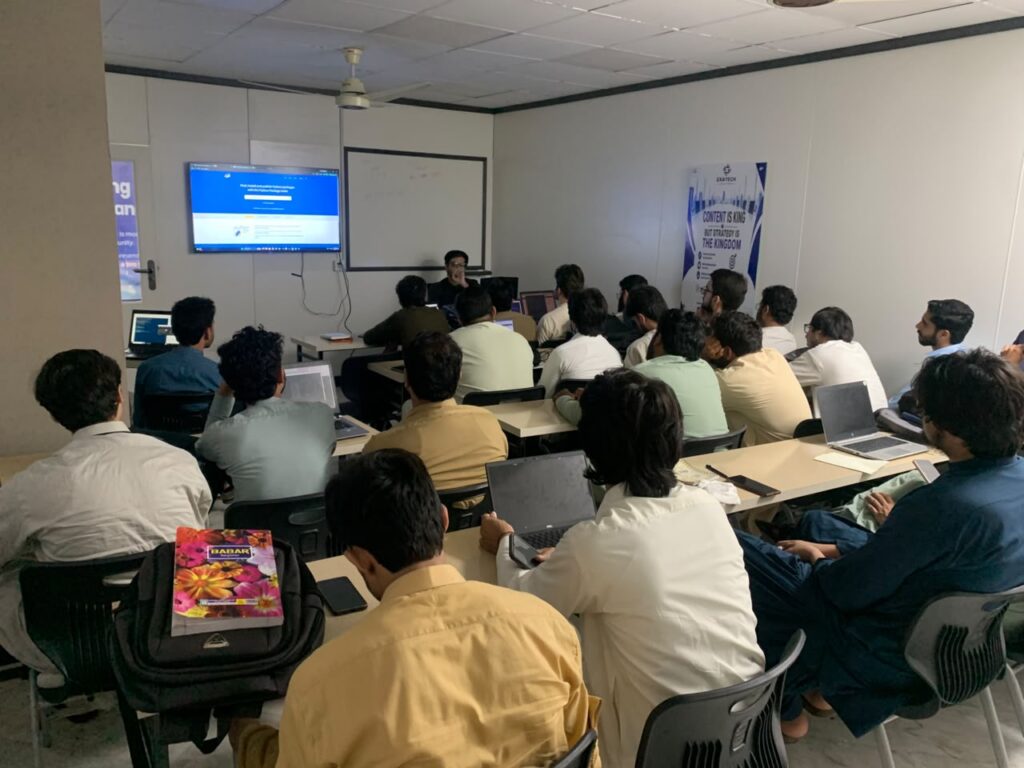
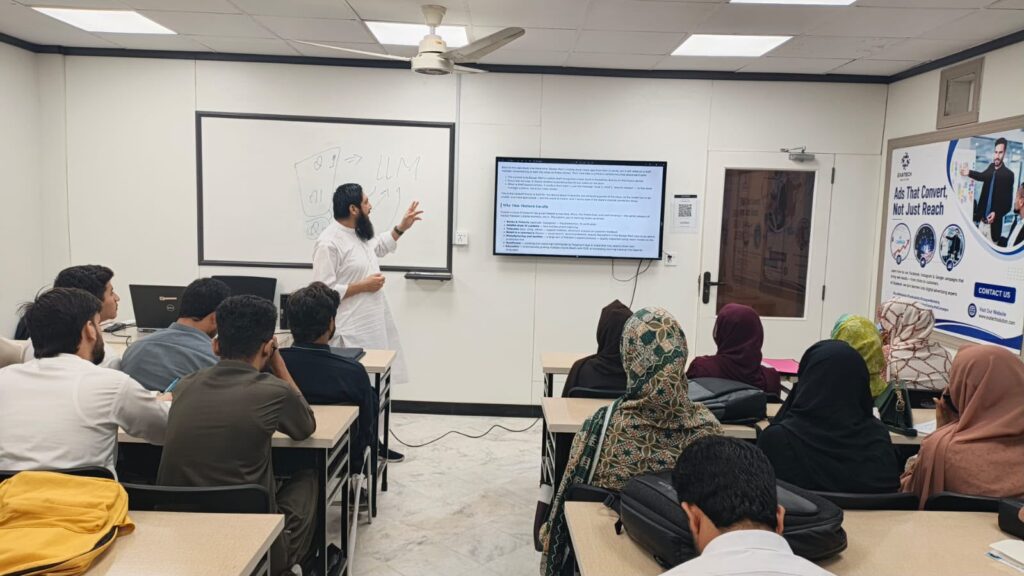
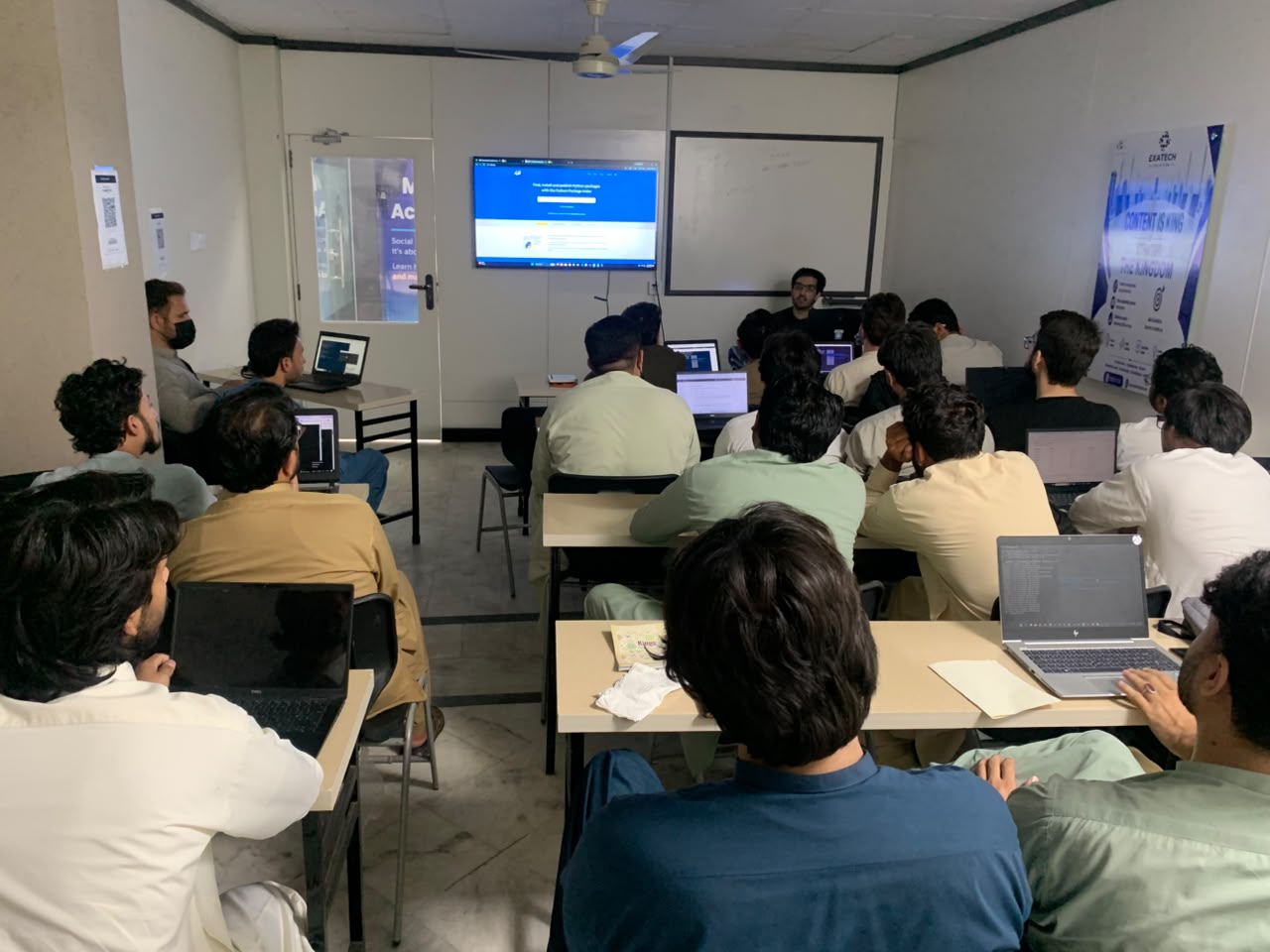
Exatech Solution’s paid AI training course is a reasonable starting point for building foundational AI knowledge, though its current syllabus for more advanced topics like LangChain or retrieval-augmented generation should be confirmed directly rather than assumed. Details are available on the AI training page, and background on the trainers is on the About Us page. Contact Exatech Solution to confirm what the current course actually covers before enrolling.
Frequently Asked Questions
Are there real prompt engineering jobs in Pakistan?
Yes, but rarely as a standalone job title. Current listings on major Pakistani job platforms show prompt engineering appearing mostly as a required skill inside broader roles like AI Engineer, AI Developer, and AI Automation Engineer, rather than as a dedicated career on its own.
Is prompt engineering a good career choice in Pakistan?
It’s a genuinely useful skill worth learning, but treating it as a standalone career destination oversells the current job market. It works best as one skill inside a broader technical role, like AI engineering or automation work.
What skills do prompt engineering-related jobs actually require?
Most listings ask for real technical skills beyond prompt writing, including Python, experience with LLM APIs, frameworks like LangChain, and sometimes retrieval-augmented generation or cloud platform knowledge. It’s not typically an accessible, no-code entry point on its own.
Can a complete beginner get a prompt engineering job?
Not immediately in most cases, since the roles that actually hire for this skill usually require broader technical ability. Beginners can start by practicing prompt engineering itself, which is learnable without code, as a first step toward more technical AI roles.
What is the salary for prompt engineering in Pakistan?
There’s no separate prompt engineer salary scale. Pay reflects whichever broader role the skill is bundled into, such as AI Engineer or Automation Engineer, and depends on experience, employer type, and whether the work is local or remote.
Can I freelance as a prompt engineer?
Freelance work specifically around prompt engineering exists but is niche and competitive. It rewards demonstrated, documented results over simply claiming familiarity with AI tools, similar to other freelance skills covered elsewhere on this site.
Conclusion
Prompt engineering jobs in Pakistan are real in the sense that the skill is genuinely valued, but they rarely exist as a standalone career, showing up instead inside broader AI Engineer, AI Developer, and automation roles. Building toward these roles means treating prompt engineering as a strong starting skill and a good early step, not the entire destination, and pairing it with real technical ability over time. If you want help thinking through where to start, get in touch with Exatech Solution for general guidance.