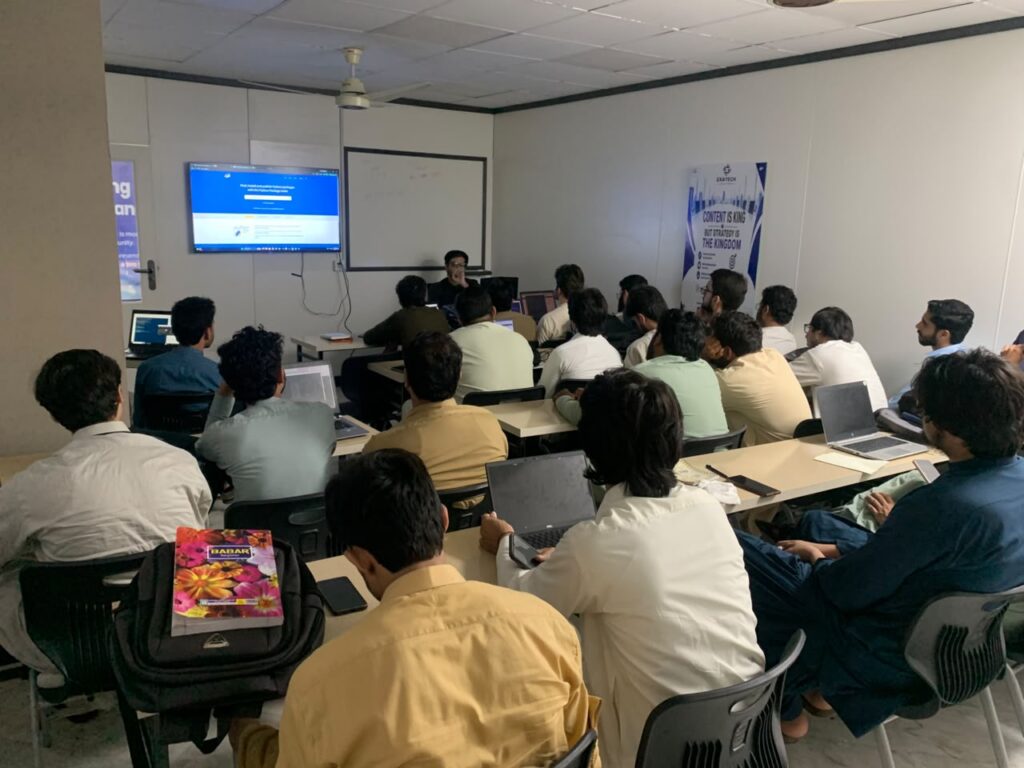
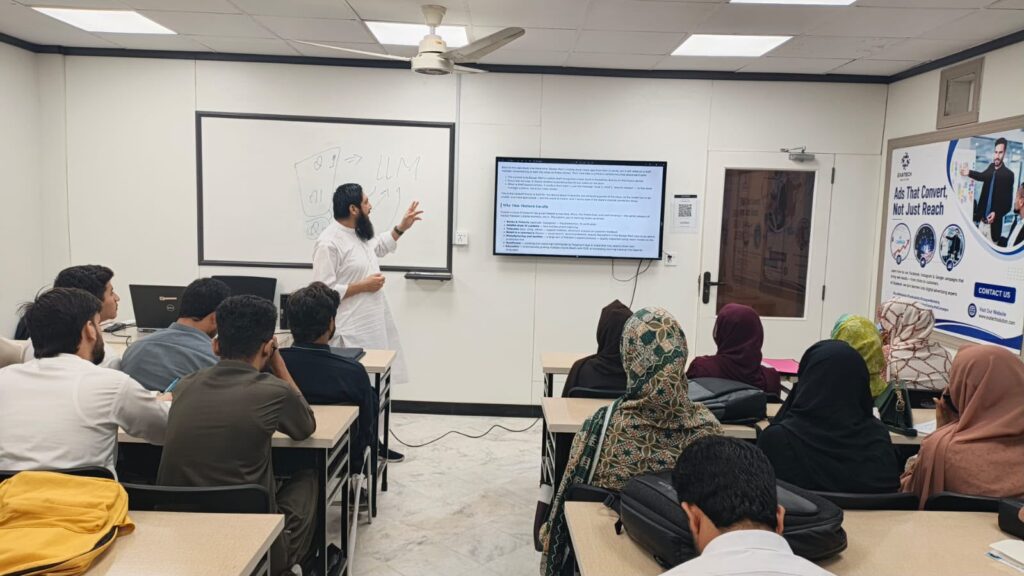
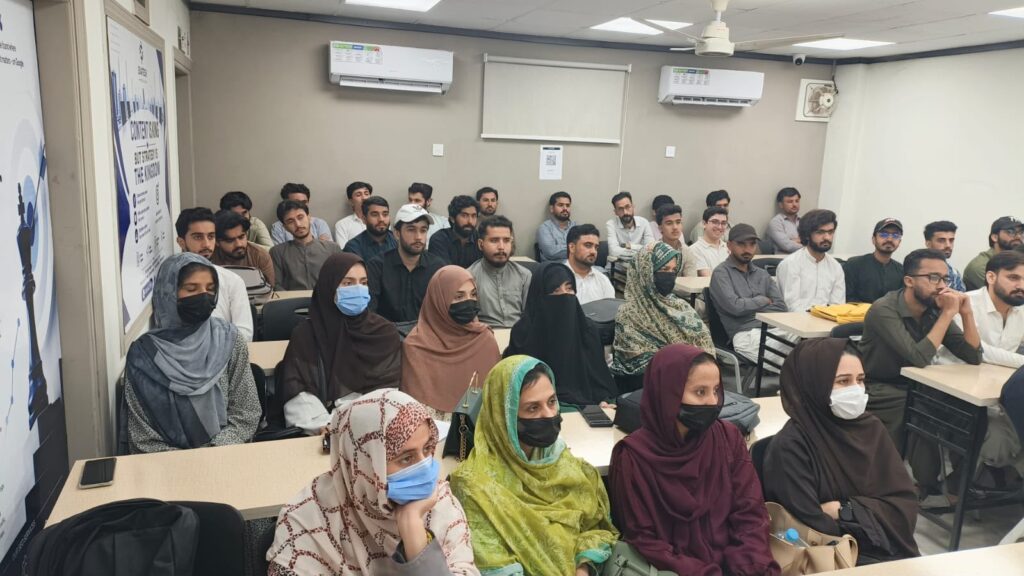
IT skills in Peshawar are increasingly what separate a job application that gets noticed from one that doesn’t, since employers are screening for demonstrated, applied ability more than credentials alone. This is a national pattern, not unique to Peshawar, but it’s one the city’s growing training ecosystem is actively responding to. ExaTech Solution is one contributor to that growing pool of practical, job-ready talent, not the sole source of it, and this article covers what skills are actually in demand, how practical training builds them, and how a student can start building their own path into this space.
This shift matters for anyone weighing where to invest time learning a new skill. A degree or a completion certificate signals that someone attended a program, but it says less than employers now want to know about what that person can actually do. Understanding this distinction changes how a student should evaluate any training option, not just the ones covered in this article.
Why Peshawar Needs More Job-Ready Tech Talent
Employers increasingly screen for demonstrated, applied skill over credentials alone, and this pattern shows up clearly in national workforce data. P@SHA’s Skills Survey 2025 found strong demand specifically for AI and machine learning tool skills, reflecting how deeply practical tool fluency is becoming embedded inside regular tech roles rather than existing as a separate specialty. This kind of shift means a certificate alone increasingly isn’t enough. Employers want to see that a candidate can actually apply what they’ve learned, which is exactly the gap practical, project-based training is meant to close.
This isn’t a uniquely Peshawar phenomenon, but the city’s own institutions have started responding to it directly. Government-backed programs and paid institutes alike have shifted their positioning toward hands-on, project-based training over the past several years, which reflects a genuine, shared recognition that theory-only education no longer matches what employers are actually screening for.
What IT Skills Are Employers Looking for in 2026?
A handful of skill areas consistently show up across current job postings and training priorities, each with a different day-to-day focus.
AI
AI tool fluency and foundational understanding of how these systems work has become broadly valuable across many roles, not just technical ones. AI training at the foundational level suits beginners with no prior technical background.
Cybersecurity
Cybersecurity remains a consistently requested skill nationally, covering everything from monitoring for threats to testing systems for weaknesses. Cybersecurity and Ethical Hacking training covers the CEH track specifically as an accessible entry point.
Web Development
Web development skills remain foundational to a huge share of digital work, from business websites to e-commerce platforms. Website Development training covers the fundamentals for students starting from zero.
Digital Marketing and SEO
Digital marketing and SEO skills support nearly every business with an online presence, and demand for both remains steady. Digital Marketing training and separate SEO training cover this territory as two distinct, focused courses.
Graphic Design and Video Editing
Visual content skills remain in demand as businesses and creators alike need a steady stream of design and video work. Graphic Design and Video Editing training covers both disciplines in one combined course.
How ExaTech Solution Approaches Practical Training
ExaTech Solution positions its courses around hands-on projects and practical tasks rather than theory and certificates alone. As with the institute’s other stated claims covered elsewhere on this site, this is positioning worth verifying directly rather than accepting at face value. Asking to see real, finished student work from a specific course is the clearest way to check whether a “practical training” claim actually holds up.
This is a claim worth checking at any institute, not just ExaTech Solution, since “practical, hands-on” language has become fairly standard across nearly every training provider’s marketing. The specific evidence, real student output, current trainer backgrounds, and up-to-date curriculum, is what separates a genuinely practical course from one that only describes itself that way.
From Theory to Practical Skills
The gap between knowing a concept and being able to apply it is where most real skill-building actually happens, which is why project-based practice matters more than lecture time alone. Understanding how a firewall works conceptually is different from actually configuring one. Knowing SEO principles in theory is different from actually improving a real site’s ranking. Practical training is meant to close that specific gap, and the strength of any course ultimately comes down to how much of that applied practice it genuinely includes.
This gap is also where most beginners underestimate how much work is actually involved. Reading about a skill feels like progress, and it is, but it’s a different kind of progress than being able to apply that knowledge under real conditions, where things don’t always go according to plan. Courses that build in enough repetition to close this gap tend to produce far more confident, capable graduates than ones that move quickly through concepts without enough hands-on reinforcement.
Why Projects and Portfolios Matter
A portfolio demonstrates capability in a way a certificate alone can’t, and it’s the clearest evidence a prospective employer or client can actually evaluate. Two candidates with the same certificate can look very different once one of them has real, finished work to show and the other doesn’t. This is true across every skill area covered above, whether that’s a working website, a documented marketing campaign, a design portfolio, or a cybersecurity lab exercise.
This is worth internalizing early, since it changes how a student should approach a course from day one. Treating every assignment as a potential portfolio piece, rather than just a requirement to complete, tends to produce noticeably stronger outcomes by the end of a course than treating each task as something to finish and move past quickly.
Helping Students, Graduates, and Career Changers
Practical IT training in Peshawar serves genuinely different starting points. Students still exploring career direction benefit from comparing course options before committing. Fresh graduates typically need to convert academic knowledge into job-ready, demonstrable skill. Career changers usually have a specific goal already in mind and benefit most from training that maps directly to that goal. Recognizing which of these describes you helps set realistic expectations for how a course should actually fit into your plan.
Each of these groups also tends to face a different obstacle. Students exploring options risk spreading attention too thin across too many possibilities. Fresh graduates sometimes underestimate how much practical, applied work their academic background is still missing. Career changers occasionally expect a shorter timeline than genuine skill-building actually requires, especially in more technical fields. Being aware of the obstacle most relevant to your situation makes it easier to plan around it realistically.
Preparing for Jobs and Freelancing
Skills built through practical training apply to both salaried roles and freelance work, though the two reward slightly different things. Salaried roles typically weigh a portfolio alongside interview performance and cultural fit. Freelance work rewards demonstrated results and a real portfolio even more heavily, since clients are evaluating strangers based almost entirely on visible proof of skill. Either path tends to have a slower start while a track record builds, so treating the first few months as an investment rather than expecting immediate results applies regardless of which direction you take.
Some students end up pursuing both paths simultaneously, taking a salaried role while building freelance work on the side, or vice versa. This isn’t unusual, and the underlying skill requirements overlap enough that progress in one path often supports the other. What matters more than choosing one path permanently on day one is building genuine, demonstrable skill first, since that’s what makes either option realistically available later.
Building Confidence Through Hands-On Learning
Confidence in a new skill area comes from repeated, applied practice, not from completing a course alone. This is why the practical, project-based approach matters beyond just producing a portfolio. Someone who has actually built, tested, and fixed their own work develops a kind of problem-solving confidence that pure theory doesn’t build on its own, and that confidence is often what shows up most clearly in a job interview or a first client conversation.
This kind of confidence also compounds over time in a way that’s easy to underestimate early on. The first project in any skill area usually feels genuinely difficult, full of small mistakes and uncertainty. By the third or fourth real project, most of that friction has usually resolved into actual competence, which is exactly why consistent, ongoing practice matters more than any single course milestone.
The Future of Tech Talent in Peshawar
Peshawar’s tech talent pool is growing through a combination of paid institutes, government-backed programs, and self-directed learners, not any single source. KPITB, the Khyber Pakhtunkhwa Information Technology Board, runs its own training initiatives covering areas like cloud computing, AI, and networking, alongside the paid institutes operating across the city. This kind of ecosystem, with multiple providers and multiple paths into the field, tends to produce a more resilient talent pool than reliance on any single institution, government or private.
Students benefit from this variety too, even if it makes the decision of where to train slightly more complicated. Having genuine options means a student can compare approaches, ask questions at multiple institutes, and choose based on actual fit rather than defaulting to whichever provider happens to be most visible. A healthy training ecosystem, in Peshawar or anywhere else, is one where students have real choices, not just one obvious default.
How Students Can Start Building Their Own Tech Career
Pick one skill area to focus on, build real practice work as you learn, and treat certifications as a foundation rather than a finish line. This holds true regardless of which institute or program you choose, ExaTech Solution or otherwise. The students who end up with genuinely strong outcomes are usually the ones who kept building beyond the minimum requirement of any single course. Contact ExaTech Solution to talk through current course options if one of the six skill areas covered above fits your goals.
Frequently Asked Questions
What IT skills are most in demand in Peshawar?
AI, cybersecurity, web development, digital marketing, SEO, and graphic design and video editing are among the most consistently requested skills, reflecting both national demand patterns and the training priorities of Peshawar’s own government-backed programs.
Is ExaTech Solution the only place to learn IT skills in Peshawar?
No. Peshawar has a range of training providers, including paid institutes and government-backed programs. ExaTech Solution is one option among several contributing to the city’s growing pool of practical, job-ready tech talent.
Do I need a technical background to start learning IT skills?
Not for every path. Several fields, including AI, digital marketing, and graphic design, are designed to be accessible to complete beginners, though genuine skill still takes consistent practice to build.
How does practical training differ from theory-based courses?
Practical training centers on hands-on projects and applied tasks, producing something a student can actually show, while theory-based courses focus more on concepts and lecture content without the same emphasis on applied output.
Can IT skills learned in Peshawar lead to freelance work?
Yes, particularly in digital marketing, SEO, graphic design, and web development. Freelance work rewards demonstrated results and a real portfolio over certificates alone, and the first few months are typically slower while building a track record.
How can I start building IT skills in Peshawar?
Pick one skill area to focus on, build real practice projects as you learn, and treat any certification as a foundation to build on rather than a guarantee of employment on its own.
Conclusion
IT skills in Peshawar are being built through a growing ecosystem of practical training, government-backed programs, and self-directed learning, with ExaTech Solution as one contributor among several rather than the sole source of that progress. Whichever path you choose, the same pattern holds: pick a skill area, build real practice work, and treat any single course as a foundation rather than a finish line. If you want to talk through where to start, get in touch with ExaTech Solution about current course options.